

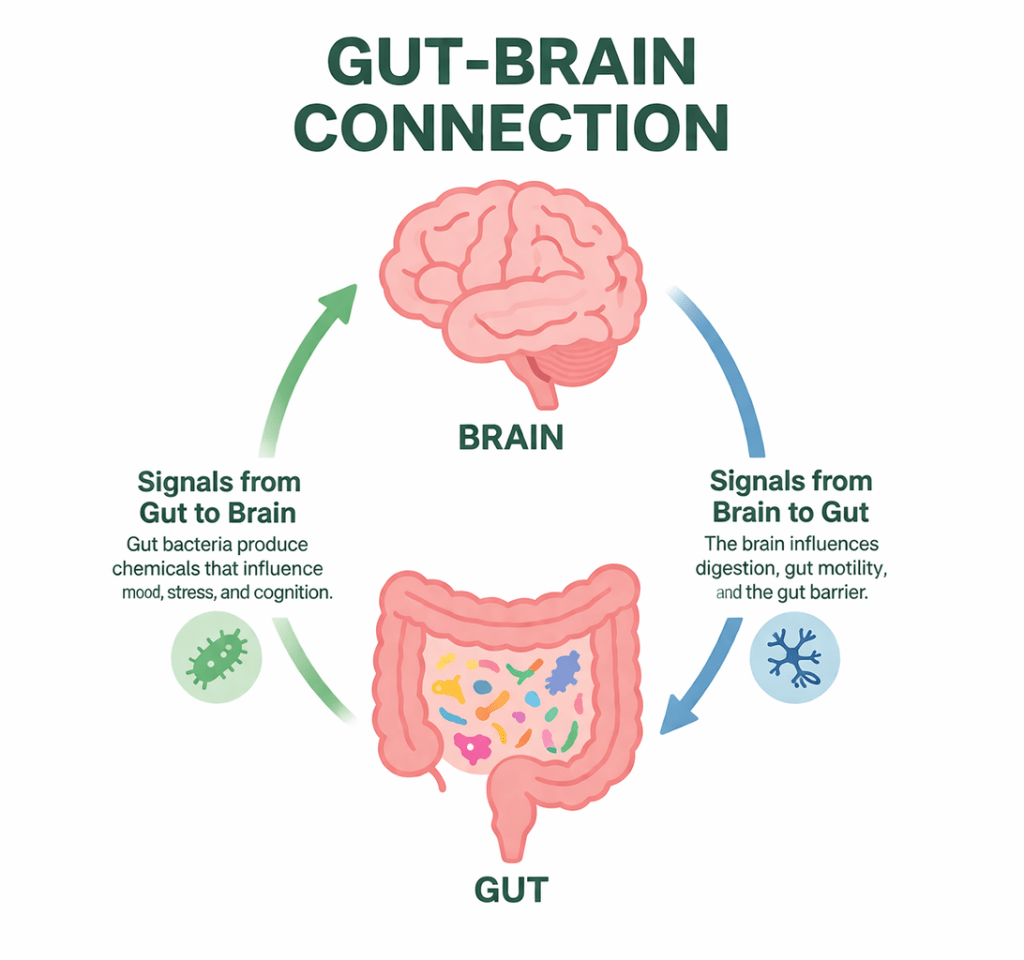
1. Gut-Brain Communication:
How it works
- Vagus nerve: The longest cranial nerve, linking your brain to your digestive tract. It transmits signals about feeling full, inflammation, and stress. Strengthening vagal tone (through deep breathing, meditation, or cold exposure) improves gut-brain signaling.
- Hormones & neurotransmitters: Around 90% of serotonin is produced in your gut. GABA reduces anxiety, while dopamine regulates motivation and reward pathways. Poor gut health can disrupt these, leading to mood swings or brain fog.
- Immune signaling: 70% of the immune system resides in your gut. Chronic inflammation or infections can send stress signals to your brain, affecting cognition and emotional health.
Thrive Tip: Include fermented foods, prebiotics, and mindfulness practices to strengthen gut-brain communication.
2. Endocannabinoid System (ECS) & Neurotransmitters
- CB1 and CB2 receptors: CB1 is abundant in the brain, and CB2 is mainly in the gut and immune cells. ECS helps regulate appetite, mood, digestion, and inflammation.
- Endocannabinoids: Anandamide and 2-AG act like “messengers” that modulate stress responses and gut motility.
- Neurotransmitters and ECS: ECS interacts with serotonin, dopamine, and GABA pathways, influencing mood, motivation, and even pain perception.
Thrive tip: Support ECS naturally with omega-3 fatty acids, stress management, regular exercise, and adaptogenic herbs like ashwagandha.
3. Understanding the Microbiome
- Your gut houses trillions of bacteria, fungi, and viruses. A diverse microbiome is linked to stronger immunity, better mood, and improved digestion.
- Probiotics: Lactobacillus and Bifidobacterium species help restore gut balance.
- Prebiotics: Fibers from onions, garlic, asparagus, and bananas feed beneficial microbes.
- Dysbiosis: Overgrowth of harmful bacteria can trigger bloating, leaky gut, inflammation, and even anxiety or depression.
Thrive tip: Eat a variety of fiber-rich and fermented foods, reduce sugar, and rotate protein sources to support microbial diversity.
4. Diet: Foods That Heal vs. Harm
- Detrimental foods: Highly processed items, refined sugars, artificial sweeteners, and excessive alcohol can promote inflammation, dysbiosis, and sluggish brain function.
- Nourishing foods:
- Fermented foods: kefir, kimchi, sauerkraut
- Prebiotic vegetables: garlic, onions, leeks, asparagus
- Omega-3 sources: salmon, flaxseed, chia seeds
- Polyphenol-rich foods: blueberries, dark chocolate, green tea
Thrive tip: Include colorful vegetables, moderate healthy fats, and plant-based proteins for optimal gut-brain support.
5. Common Gut Issues and Their Brain Impact
- Digestive issues: Constipation, diarrhea, bloating, gas, and acid reflux can indicate gut imbalance.
- Cognitive & emotional impact: Brain fog, anxiety, depression, fatigue, and sleep disturbances are often associated with gut health.
- Inflammatory response: Leaky gut can increase systemic inflammation, influencing heart, brain, and metabolic health.
Thrive tip: Track symptoms and dietary triggers to identify patterns. Consider a food elimination trial under guidance if issues persist.
6. Natural Remedies for Gut-Brain Wellness
- Probiotics & fermented foods: Restore beneficial bacteria.
- Prebiotics: Feed your microbiome.
- Herbs & spices: Ginger (reduces nausea), peppermint (soothes IBS), turmeric (anti-inflammatory).
- Mind-body practices: Yoga, meditation, and deep breathing improve vagal tone.
- Lifestyle factors: Sleep, stress reduction, and moderate exercise boost neurotransmitter balance and digestion.
Thrive tip: Incorporate one gut-friendly habit per day and track improvements over 4–6 weeks.
7. Heart-Brain-Gut Connection
- Inflammation link: Poor gut health can trigger systemic inflammation, affecting cardiovascular and brain health.
- Healthy microbiome: Helps regulate blood pressure and cholesterol, and reduces stress-induced cardiovascular strain.
- Lifestyle synergy: Exercise, nutrient-rich diet, and stress management benefit gut, brain, and heart simultaneously.
Thrive tip: Try a daily 20-minute walk, include heart-healthy foods (like berries, nuts, fatty fish), and practice gratitude journaling for stress reduction.
8. Mastering Your Own Gut Health
- Listen to your body: Track digestion, energy levels, mood, and sleep.
- Experiment with foods: Test how dietary changes affect your gut and cognition.
- Lifestyle factors: Prioritise sleep, stress management, and regular movement.
- Professional guidance: Consider nutritionists or gastroenterologists for personalised plans.
“A healthy gut is the foundation of a thriving mind and body.”
 Lynne's Zen room