
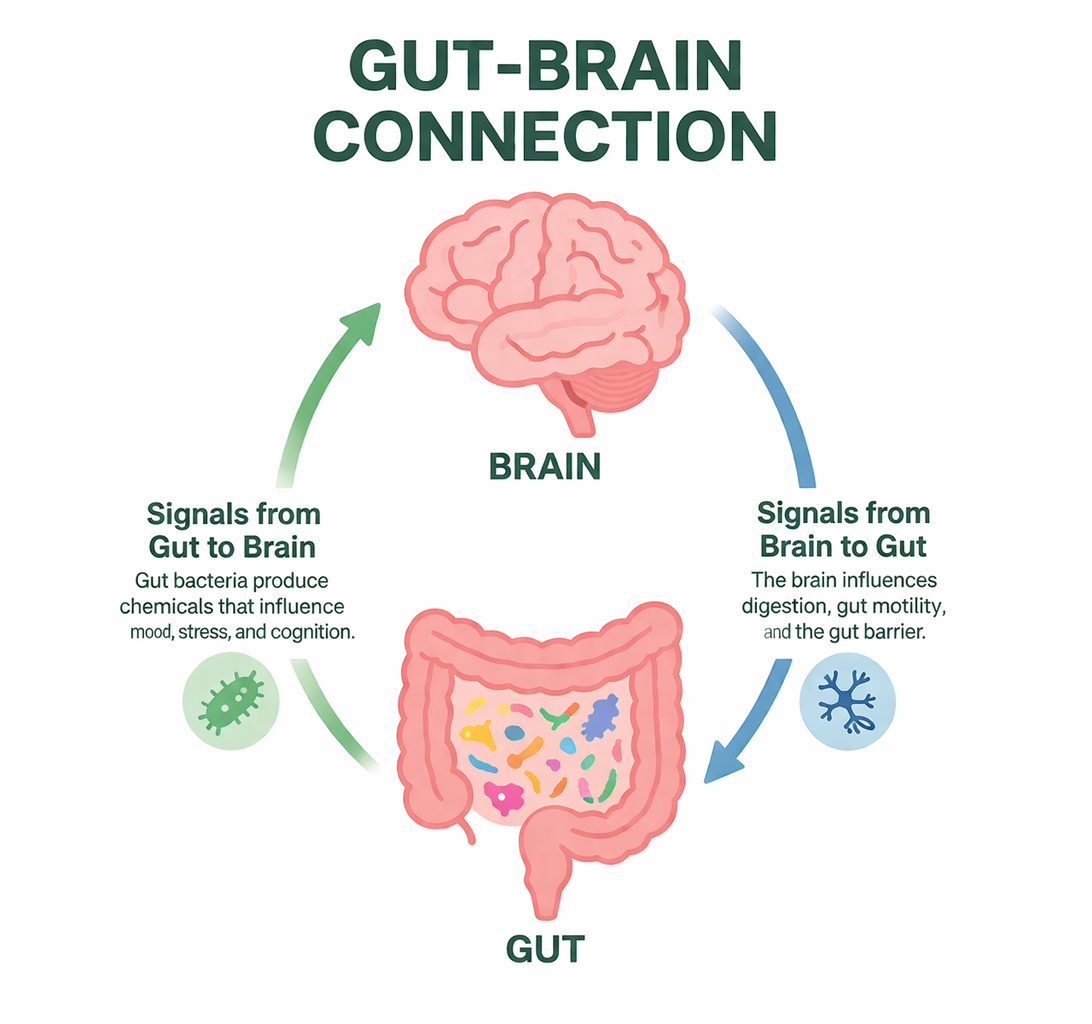
Gut-Brain Communication
Your gut and brain are deeply connected through a powerful network known as the gut–brain axis. This system allows the “second brain,” part of the enteric nervous system, to communicate continuously with the brain, shaping how we digest food, process stress, and support mental wellbeing. When your gut is thriving, your brain often is too.
The Vagus Nerve: Your Gut–Brain Highway
The vagus nerve is the longest cranial nerve in the body and the main communication pathway between your brain and digestive system. It runs from the brainstem down through the digestive organs, constantly sending signals in both directions.
This pathway helps regulate key functions such as:
• Digestion
• Heart rate
• Inflammation
• Feelings of fullness or nausea
Because the brain and gut are closely linked through the vagus nerve, psychological stress can slow digestion, trigger stomach discomfort, or cause changes in appetite. Slow, deep breathing stimulates the vagus nerve and activates the parasympathetic nervous system, helping the body shift into a calmer “rest and digest” state.
When we feel “butterflies” in our stomachs, that’s the vagus nerve transmitting stress signals from our brain directly to our gut.
Gut Microbes and Mood Chemicals
Your gut is home to trillions of microbes that play a major role in brain chemistry. Around 90% of serotonin, which is the body’s key mood-regulating neurotransmitter, is produced in the gut. Gut microbes also influence other important brain chemicals, including:
• GABA, which helps calm the nervous system
• Dopamine precursors, which influence motivation and reward pathways. When the gut microbiome becomes imbalanced, these chemical signals can be disrupted, potentially contributing to low mood, anxiety, or brain fog.
Hormones that signal hunger and fullness
Your digestive system also communicates with the brain through hormones released into the bloodstream.
Key appetite signals include:
- Ghrelin – signals hunger
- Leptin – signals fullness
- Peptide YY – helps regulate appetite after meals
Immune signals from the gut
Around 70–80% of the body’s immune cells live in the gut, making it one of the most important immune centers in the body. Gut bacteria interact with immune cells and influence the release of cytokines, which can affect:
• Mood and emotional balance
• Energy levels
• Brain inflammation
• Stress responses
When the gut becomes inflamed or imbalanced, these signals can influence both mental clarity and emotional wellbeing.
Thrive Tip 🌿
Strengthen your gut–brain connection with small daily habits:
- Include fermented foods such as kefir, yogurt, kimchi, or sauerkraut
- Eat prebiotic-rich foods to nourish beneficial gut bacteria
- Practice mindfulness, breathwork, or meditation to support vagal tone
- Singing and laughter also strengthen the gut-brain connection
- Prioritise sleep and stress management
A healthy gut supports a healthy mind, and nurturing this connection can transform how you feel, think, and function every day.
Endocannabinoid System and Neurotransmitters
- CB1 and CB2 receptors: CB1 is abundant in the brain, and CB2 is mainly in the gut and immune cells. The endocannabinoid system (ECS) helps regulate appetite, mood, digestion, and inflammation.
- Endocannabinoids (ECB): Anandamide and 2-AG act like “messengers” that modulate stress responses and gut motility.
- Neurotransmitters and ECS: ECS interacts with serotonin, dopamine, and GABA pathways, influencing mood, motivation, and even pain perception.
Thrive tip 🌿
Support ECS naturally with omega-3 fatty acids, stress management, regular exercise, and adaptogenic herbs like ashwagandha.
Understanding the microbiome
- Your gut houses trillions of bacteria, fungi, and viruses. A diverse microbiome is linked to stronger immunity, better mood, and improved digestion.
- Probiotics: Lactobacillus and Bifidobacterium species help restore gut balance.
- Prebiotics: Fibers from onions, garlic, asparagus, and bananas feed beneficial microbes.
- Dysbiosis: Imbalances in the numbers of healthy and harmful bacteria can lead to overgrowth of harmful bacteria, which can trigger bloating, leaky gut, inflammation, and even anxiety or depression.
Thrive tip 🌿
Eat a variety of fiber-rich and fermented foods, reduce sugar, and rotate protein sources to support microbial diversity.
Diet
- Detrimental foods:
- Highly processed items, refined sugars, artificial sweeteners, and excessive alcohol can promote inflammation, dysbiosis, and sluggish brain function.
- Nourishing foods:
- Fermented foods: kefir, kimchi, sauerkraut
- Prebiotic vegetables: garlic, onions, leeks, asparagus
- Omega-3 sources: salmon, flaxseed, chia seeds
- Polyphenol-rich foods: blueberries, dark chocolate, green tea
Thrive tip 🌿
Include colorful vegetables, moderate healthy fats, and plant-based proteins for optimal gut-brain support.
Common gut issues and their brain impact
- Digestive issues: Constipation, diarrhoea, bloating, gas, and acid reflux can indicate gut imbalance.
- Cognitive and emotional impact: Brain fog, anxiety, depression, fatigue, and sleep disturbances are often associated with gut health.
- Inflammatory response: Leaky gut can increase systemic inflammation, influencing heart, brain, and metabolic health.
Thrive tip 🌿
Track symptoms and dietary triggers to identify patterns. Consider a food elimination trial under guidance if issues persist.
Natural remedies for gut-brain wellness
- Probiotics and fermented foods: Restore beneficial bacteria.
- Prebiotics: Feed your microbiome.
- Herbs and spices: Ginger (reduces nausea), peppermint (soothes IBS), turmeric (anti-inflammatory).
- Mind-body practices: Yoga, meditation, and deep breathing improve vagal tone.
- Lifestyle factors: Sleep, stress reduction, and moderate exercise boost neurotransmitter balance and digestion.
Thrive tip 🌿
Incorporate one gut-friendly habit per day and track improvements over 4–6 weeks.
Heart-brain-gut connection
- Inflammation link: Poor gut health can trigger systemic inflammation, affecting cardiovascular and brain health.
- Healthy microbiome: Helps regulate blood pressure and cholesterol, and reduces stress-induced cardiovascular strain.
- Lifestyle: Exercise, a nutrient-rich diet, and stress management benefit the gut, brain, and heart simultaneously.
Thrive tip 🌿
Try a daily 20-minute walk, include heart-healthy foods (like berries, nuts, fatty fish), and stress reduction practices.
Mastering Your Own Gut Health
- Listen to your body: Track digestion, energy levels, mood, and sleep.
- Experiment with foods: Test how dietary changes affect your gut and cognition.
- Lifestyle factors: Prioritise sleep, stress management, staying hydrated, and regular movement.
- Professional guidance: Speak to a specialist for personalised plans.
Natural remedies for improving gut-brain health
Herbal supplements:
Certain herbs have traditionally been used to support digestion, calm the nervous system, and strengthen the gut–brain connection. Ginger and peppermint may help soothe digestive discomfort and support healthy gut motility, while chamomile and lemon balm are known for their calming effects on the nervous system and may help reduce stress-related digestive symptoms. Turmeric, rich in curcumin, has anti-inflammatory properties that may support both gut health and brain function, and ashwagandha is often used in herbal medicine to help the body manage stress, which can positively influence the gut–brain axis.
However, while herbal remedies can be beneficial, they are not always suitable for everyone. Some herbs may interact with medications, including antidepressants, blood thinners, or medications for blood pressure and digestion. For this reason, it is important to speak with a healthcare professional or qualified herbal practitioner before starting any new herbal supplement, particularly if you are taking prescribed medication, pregnant, or managing a health condition. Supporting gut–brain health works best when herbal approaches are combined with balanced nutrition, stress management, quality sleep, and regular movement.
Essential oils:
Certain essential oils may help support the gut–brain connection by promoting relaxation, easing digestive discomfort, and calming the nervous system. Peppermint is widely used to support digestion and may help relieve bloating or abdominal discomfort. Ginger is traditionally associated with digestive support and may help reduce feelings of nausea. Lavender is well known for its calming properties and may help reduce stress and support better sleep, which can positively influence the gut–brain axis. Chamomile and fennel are also used in aromatherapy to help relax the nervous system and soothe digestive tension.
Essential oils can be used through aromatherapy diffusers, inhalation, or diluted topical application, such as a gentle abdominal massage. However, essential oils are highly concentrated and should always be properly diluted in a carrier oil before applying to the skin; some oils may not be suitable for children, during pregnancy, or in certain health conditions. In addition, essential oils may interact with medications or cause sensitivities in some individuals, so it is advisable to consult a qualified healthcare professional before using them therapeutically, especially if you are taking medication or managing a medical condition.
“A healthy gut is the foundation of a thriving mind and body.”
If you would like to receive monthly Thrive Guides, please enter your email address below and press subscribe